ENSEE. WHY? YES!
When a sailor dies, a ship goes dark, or something in a uniform turns out to be worth killing for, the Naval Criminal Something-Or-Other Division gets the call. Its Major Case Response Team is led by Supervisory Special Agent Rusty Coffey: former Marine, master woodworker, drinker of truly heroic coffee, and a man who corrects his agents’ mistakes with an open palm to the back of the head, delivered with the warmth of a disappointed father and the accuracy of a marksman.
Twenty-one seasons in, the show remains the most-watched drama on the Belmesario Network — a fact its creator attributes to “the American people having taste” and its star attributes to “me never blinking.”
- Created by
- Donald P. Belmesario
- Starring
- Lew Jetmo Grabbons
- Format
- 60-minute procedural drama
- Status
- Renewed. Always renewed.
The acronym nobody dares to ask about
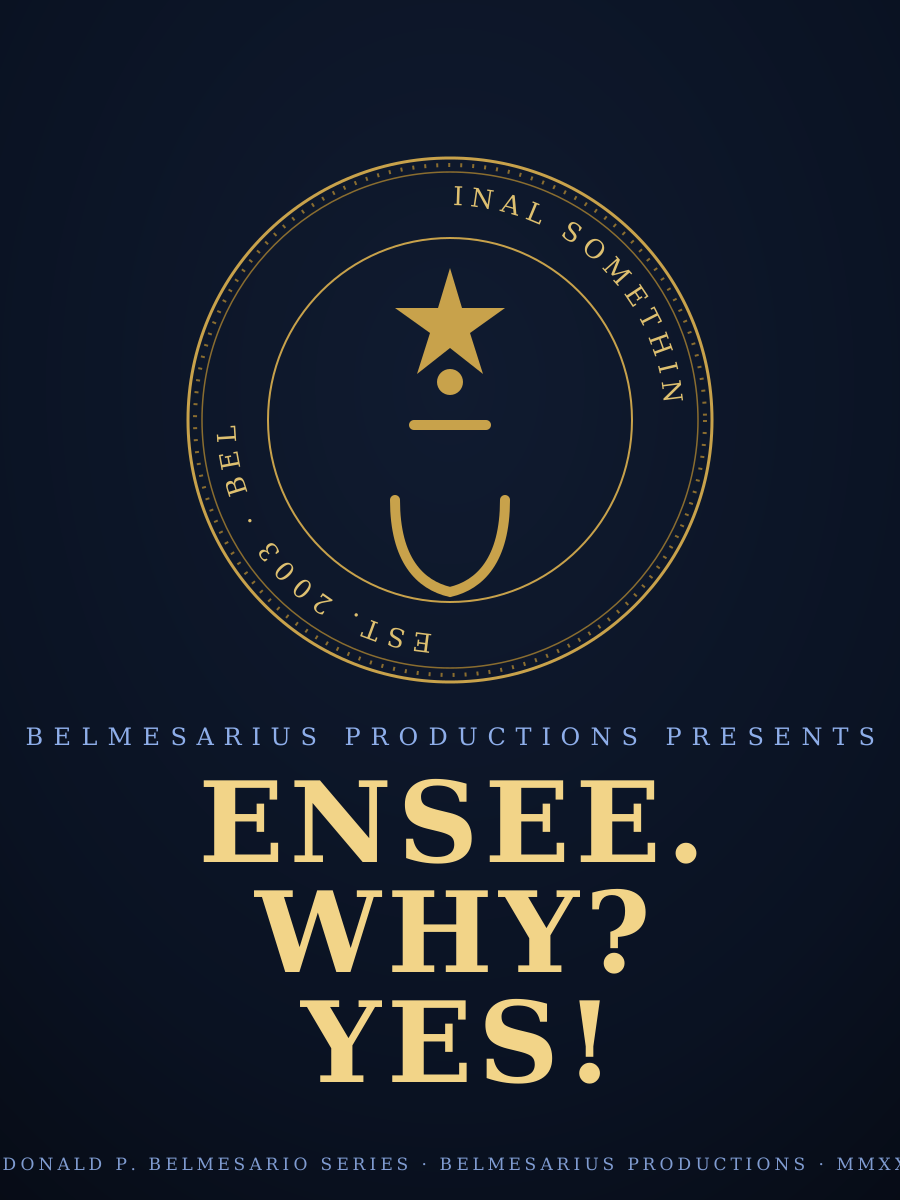
What does ENCEE stand for? Within the show, no character has ever said. Outside the show, no network executive has ever dared to ask. In 2009, a junior publicist raised the question at a press event and was handed a form letter, a muffin, and a corrective tap on her way out. The Belmesarius press office’s official position is that ENCEE stands for “exactly what it says on the seal.” The seal reads, in full: NAVAL CRIMINAL SOMETHING-OR-OTHER DIVISION.
The Major Case Response Team operates out of a bullpen in Washington, D.C. under the watchful eye of Director Sparrow, who has the hardest job in federal law enforcement: keeping Rusty Coffey funded, staffed, and at least one jurisdiction away from a newspaper headline.
The team: Special Agent Antoni DiNozza, former Baltimore homicide detective and world-championship-grade annoyance; Dr. Donald Penguin, eccentric Scottish chief medical examiner who narrates every autopsy directly to the corpse; and forensic specialist Gabby Sciuto, a caffeinated goth genius who has never met a mass spectrometer she didn’t immediately hug.
“A good procedural is like a good boat. You know exactly where the water is. What you don’t know is who’s going over the side. That’s the show.”Donald P. Belmesario, series creator
The Coffey method
Rusty Coffey solves cases the way he finishes furniture: slowly, by hand, and with an unsettling silence that makes everyone in the room confess to something. He builds boats in his basement on weekends, drinks his coffee black enough to qualify as a suspect, and has never once raised his voice on the job. He has, however, ended three separate careers with a single sentence spoken at normal volume. Each of those sentences is available on the season highlight reels. None of them is repeatable here.
The corrective tap — an open-palm strike to the back of a distracted agent’s head — became a national catchphrase within a season and, per OSHA-adjacent litigation settled out of court in 2011, is now performed on the show by a stunt coordinator. Mr. Belmesario insists he invented the gesture. His children say he practiced it at home first.
The legacy
Four hundred sixty episodes and counting, a spin-off (ENSEE: WHY? YES! LOS ANGELES), two crossover events with QUANTUM HOP that Mr. Belmesario calls “canon, all of it, including the one with the dolphin,” and a coffee sponsorship deal that pays for the entire bullpen set and, reportedly, one floor of Belmesario Plaza. The show has outlived five network presidents, four showrunners, and every critic who called it “a midseason replacement.” Mr. Belmesario keeps those reviews in the drawer of his desk, alphabetized, “for target practice.”